Since writing my last blog post, complaining about the lack of clear skies, I remembered that over the summer I tried to capitalise on the few hours of darkness available to attempt some astrophotography.
Originally, I'd planned to image a target for 2-3 hours a night, for at least 5 or more nights in an effort to gather a decent amount of data. After a couple of nights, the weather took a turn for the worse and eventually I forgot that I'd even started!
In this post I plan to recap these couple of nights but I'll try to keep it brief, since I don't really recall much in the way of detail.
As usual this imaging session started with trying to decide on a target, this time around I relied on the Sky Safari Pro app on iOS to help me figure out a good choice. After applying some filters on the types of celestial objects and checking for targets that pass close to the zenith around midnight I came across a possible candidate, a mere 5,000 light years from Earth, situated in the Cygnus constellation; the Crescent Nebula.
As far as I was aware, it was a lesser known target that's not photographed all that often. I only recognised it thanks to Russell's Astrophotography. He in combination with a couple of other astrophotographers had worked together to capture a vast amount of data (30+ hours!) on the target which they processed as one and were awarded with a NASA APOD for their efforts. The final image was spectacular and I'd recommend checking out the video and the channel more generally.
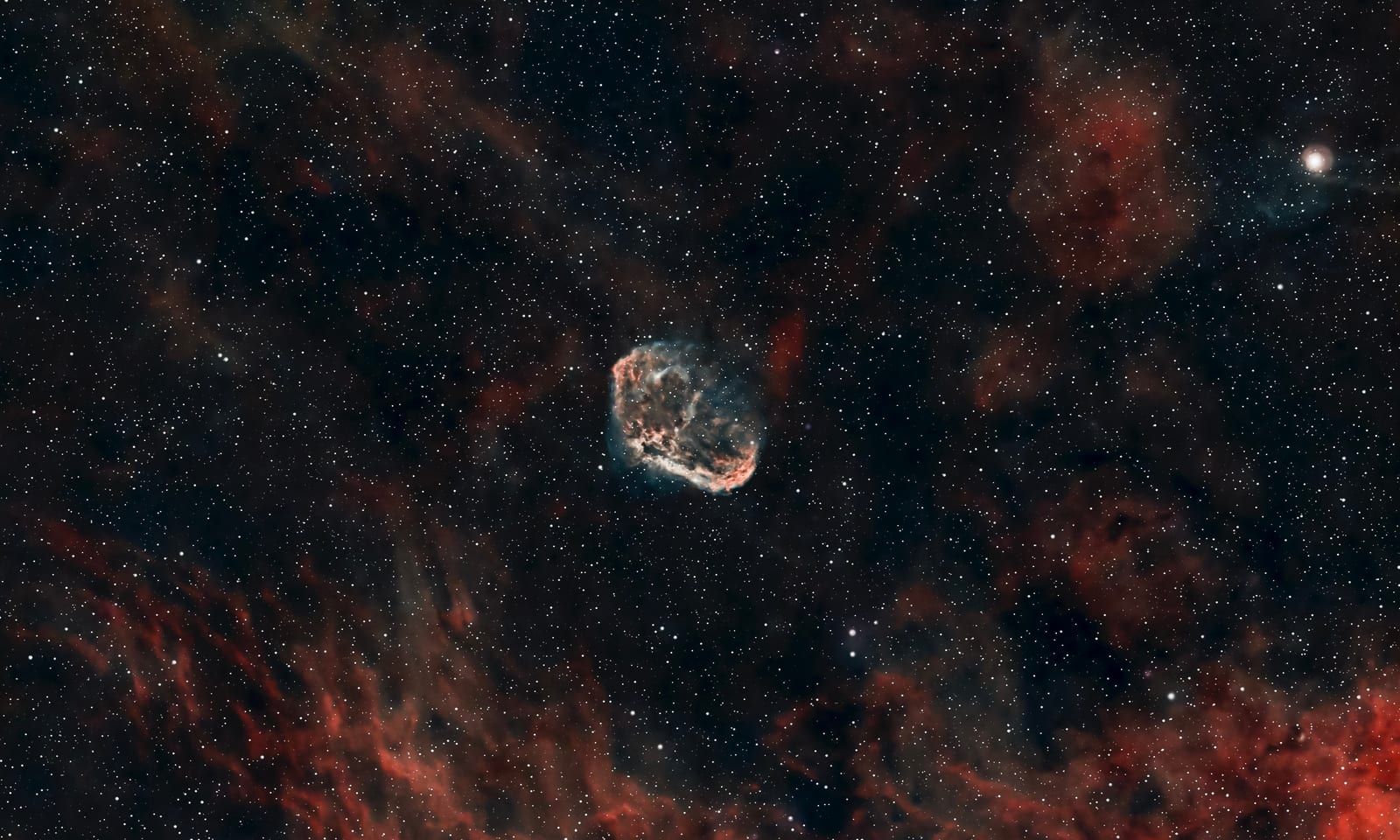
As for my attempt, I won't be winning an APOD any time soon. I didn't even come close to capturing 30 hours of data. In the end I just about managed to scrape together 7.5 hours on the target. Quite the challenge when it comes to image processing.
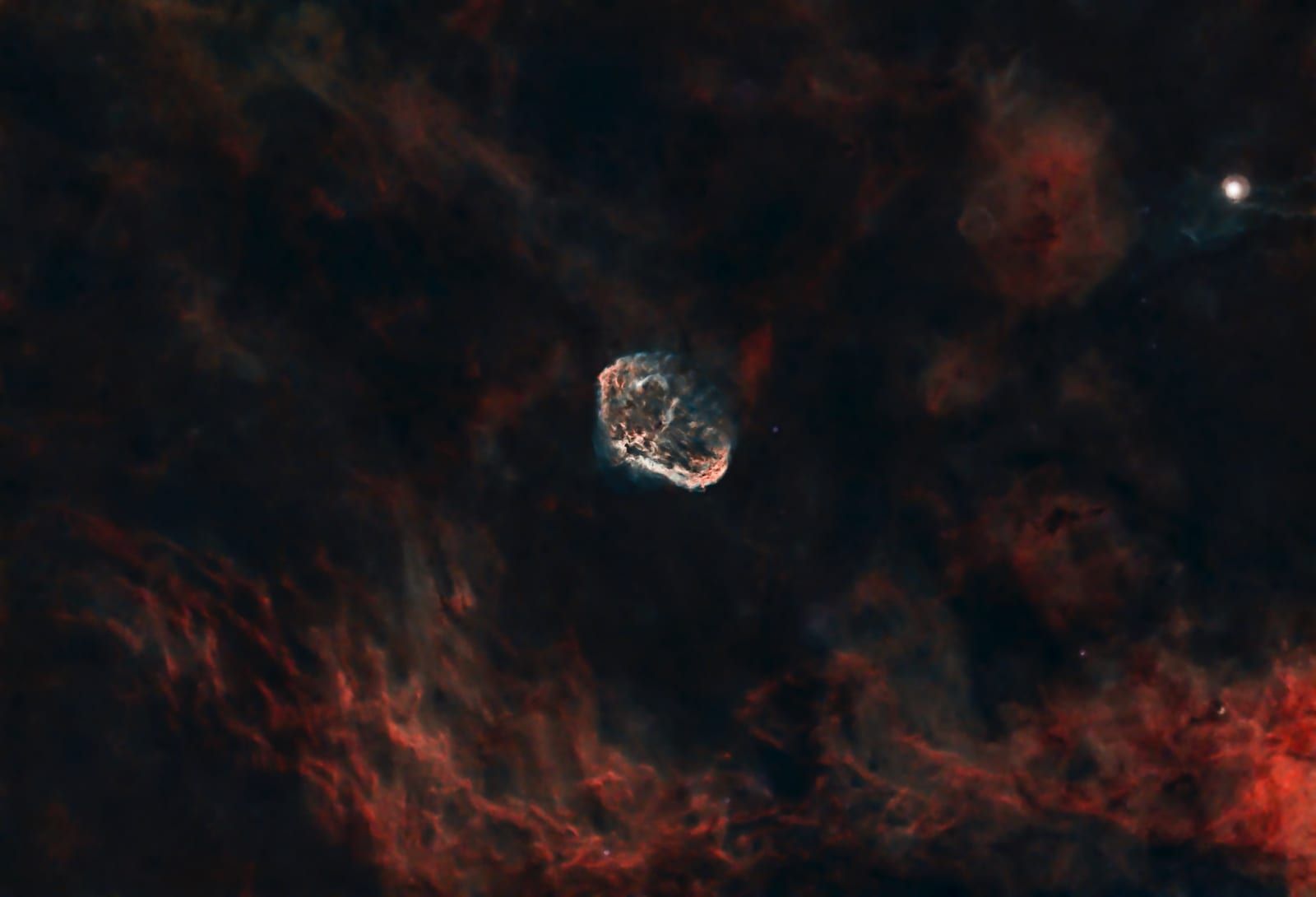
Once I'd processed the data I was actually pretty happy with the resulting image. I managed to capture far more detail in the nebula than I expected and I was happy to see some of the O₃ (oxygen) around the edges of the nebula show up. I knew full well that the chances of being able to pull out much detail were slim but I figured it was worth a shot and I feel like it paid off.
I'm still in no doubt that the image has a lot of room for improvement and it's definitely a target that I'd like to revisit again in future and have another crack at. As and when this comes around I'd likely try to increase the focal length I use, this could take the form of a different telescope, the other option I've been considering already is removing my focal reducer which would in turn give me back some focal length. The downside being it would also mean I need to spend more time on the target to capture the equivalent amount of light. Something to think more about and perhaps decide based on the weather at the time.
As for image processing, I made use of PixInsight. I've been using it since I first started astrophotography and despite its steep learning curve and rather quirky mode of operation I continue to use it as it seems to help me produce decent images.
This time around I also decided to create a starless version of my final image too. I feel it really brings out the contrast in the dust clouds and further emphasises the detail in the nebula itself.