
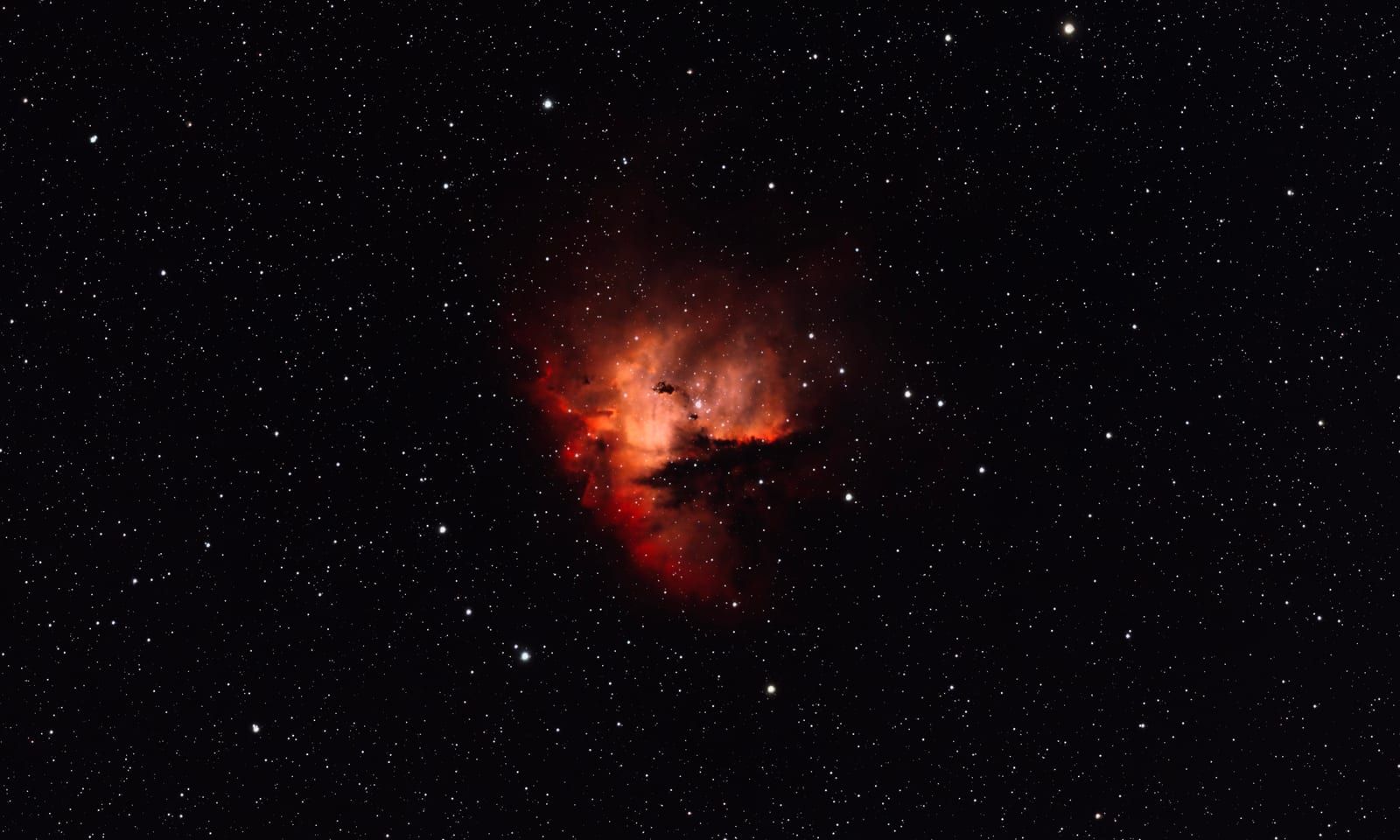
Back at the beginning of 2023 when the days were short and the nights were long I embarked on a new project to photograph the Pacman nebula (NGC 281). Situated in the constellation of Cassiopeia approximately 9,200 light years from Earth, the emission nebula features an open star cluster along with distinctive dust lanes giving it the iconic Pacman shape.
I’d originally planned to shoot the target over the course of several nights in an effort to gather as much data as possible, however, as usual the weather didn’t play ball. After a week or two of poor conditions I must have forgotten all about my new and exciting project and moved on to other things, leaving the data from the first night sitting on my computer unused.
Hop forward to the present day and whilst I was doing a clean-up and reorganisation of my astrophotography data I noticed the files sitting there again. It had been a while since I’d been able to get the telescope out so this was a really nice surprise. An opportunity to process an albeit limited set of data and create a new image!
Now I know that volume of data is really important when it comes to a top-notch image. However, a night’s worth of data is better than nothing and more often than not, it’s the image processing that makes all the difference. A top-notch imaging rig and guiding is fantastic, but if the image processing doesn’t match up then the result will be disappointing. I reckon the weighting for a quality image is somewhere around 25% imaging and 75% processing.
With that in mind I fired up PixInsight and got to work stacking the individual frames and calibrating them with flats, dark flats and darks. After a short image processing workflow on the resulting stacked image I managed to produce a rather pleasing result. Not only is there minimal noise in the image but I was also pleased to see a good amount of detail in the heart of the nebula.
Since then I’ve been contemplating revisiting some of the data from my earlier imaging sessions from last year and beyond. In the early days I wasn’t very good at using PixInsight to bring out the best of the data I’d collected and as such the resulting images are likely of a subpar quality versus where they could be. Going back and reprocessing some of the data could produce better quality images. Perhaps a topic for a future blog post.