It's the 31st of December, the final day of 2024, and that feels like the right moment to sit down and look back over the past twelve months of astrophotography. It's been a busy year by my standards. I switched to a mono camera, captured targets like the Elephant Trunk and the Cygnus Wall, and somehow ended up photographing the Northern Lights from southern England, which is not a sentence I ever expected to write.
The biggest change of the year was undoubtedly the move from my one-shot colour camera, the ZWO ASI 294MC Pro, over to a mono camera, the ASI 2600MM Pro. It wasn't a painless transition. There were filters to set up, a filter wheel to install them into and back focus to perfect, and each of those tripped me up in its own way. But the results have been worth every bit of the effort. I also got my hands on my first planetary camera, the ASI 662MC. I've experimented a little with it on the Moon and Jupiter but haven't had a chance to fully explore what it can do yet; that's one for the coming year. The rest of the rig has stayed the same: the William Optics Zenithstar 81 on a Sky-Watcher HEQ5 Pro, a William Optics 50mm Slide-base Uniguide Scope with a ZWO ASI 120mm Mini for guiding, all run by the ASIAir Pro, and the 2600MM Pro now paired with Antlia Sii, Ha, Oiii and LRGB-V Pro filters.
The year started well. January brought several clear nights and I made the most of them with two favourite targets: the Orion Nebula and the Horsehead Nebula. The Orion image is probably my best shot of it to date, taken with the ASI 294MC Pro before the switch, and the detail exceeded my expectations. It's a target I plan to revisit with the mono setup, mostly for the comparison. The Horsehead is a trickier one for me because it sits low in the sky with limited visibility from my location. Despite that, I was really pleased with the result, although there was some noticeable haloing around the stars which I'm hoping the upgraded filters will improve when I come back to it with the mono camera.
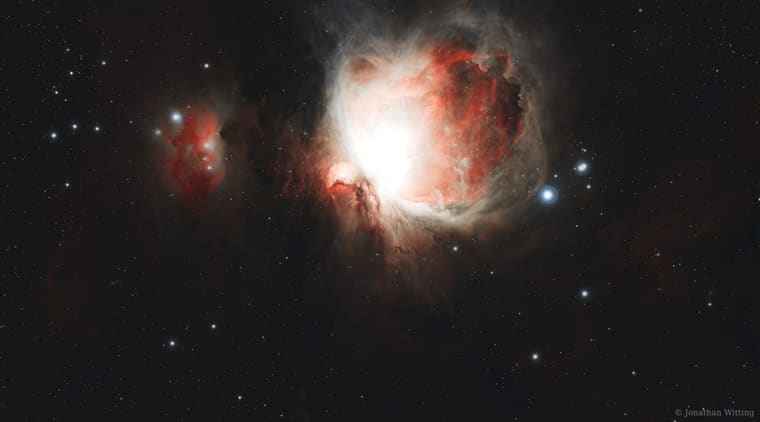 Orion Nebula6h 6m · William Optics Zenithstar 81 APO · ZWO ASI 294MC ProView in gallery →
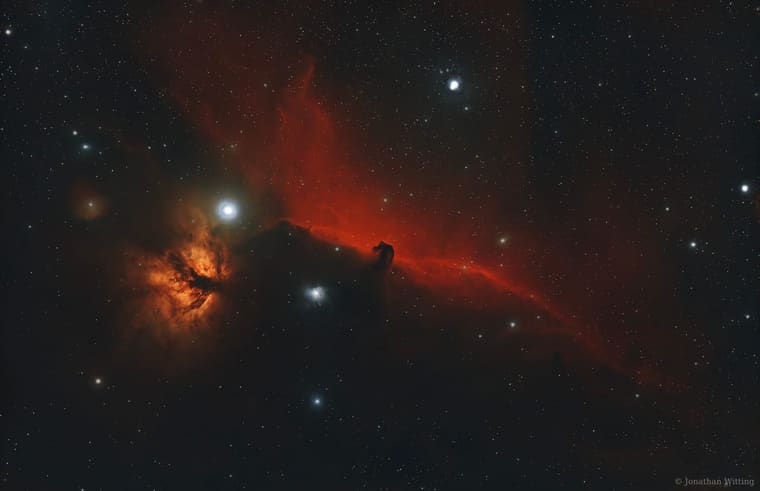 Horsehead NebulaWilliam Optics Zenithstar 81 APO · ZWO ASI 294MC ProView in gallery →
April was a month of firsts. I tested the new ASI 662MC on the Moon, and while conditions weren't ideal I came away with a decent first image. I also had a go at Saturn, though the results weren't worth sharing; my telescope has a very limited focal length, which isn't ideal for planetary work. More importantly, that same month brought my first deep-sky capture with the ASI 2600MM Pro: Bode's Galaxy. This is where the move to mono really started to pay off. The capture came out vibrant, with lots of detail showing through across the different colour channels, and I'm really happy with the image.
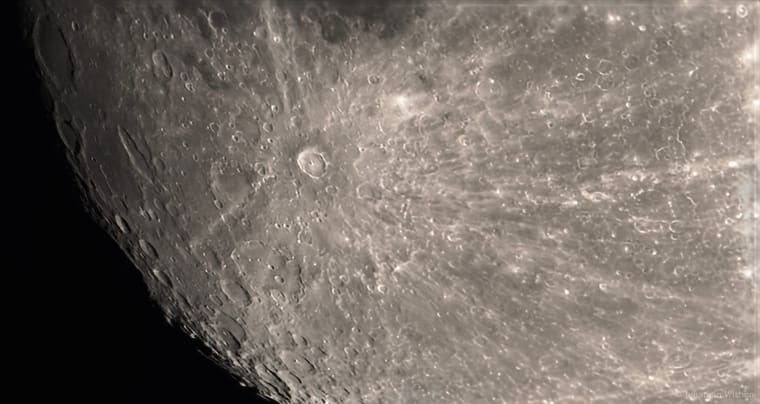 The MoonWilliam Optics Zenithstar 81 APO · ZWO ASI 662MCView in gallery →
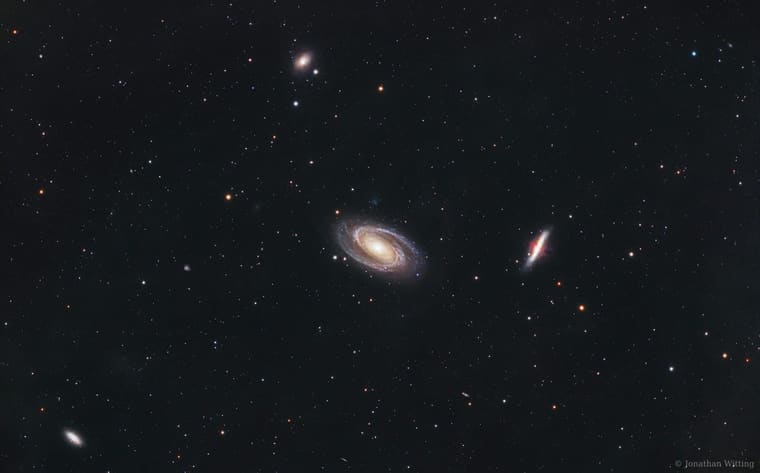 Bodes Galaxy5h · William Optics Zenithstar 81 APO · ZWO ASI 2600MM ProView in gallery →
In May I revisited the Whirlpool Galaxy. It has always been one of my favourite targets, and it was one of the first I ever photographed when I started astrophotography several years ago. This time I shot it in LRGB with the mono camera, and I feel like I finally did the galaxy justice; it's one of the best images of it I've managed to compose.
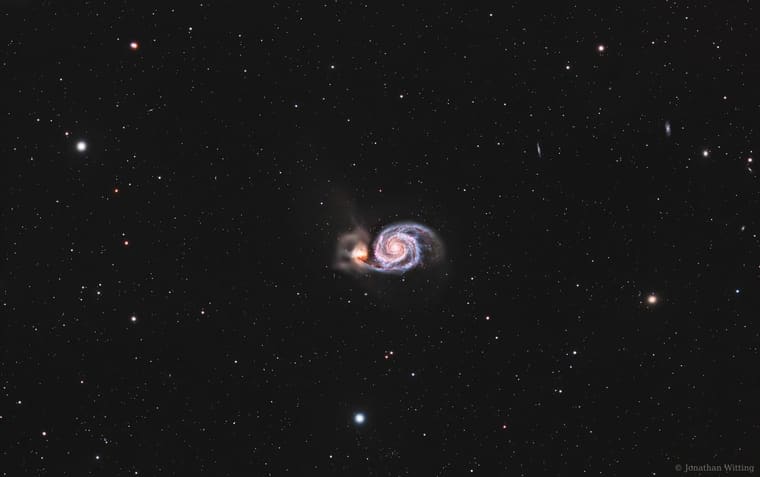 Whirlpool Galaxy6h · William Optics Zenithstar 81 APO · ZWO ASI 2600MM ProView in gallery →
Summer offered a few clear nights too, which let me get started on some nebulae. In July, across several nights, I gathered around twelve and a half hours of exposure on the Elephant Trunk Nebula, and the image I produced is one I'm really proud of. One of my colleagues even mistook it for a James Webb photo, though of course it's far from that level. The Cygnus Wall was another SHO (sulphur, hydrogen, oxygen) effort with almost thirteen hours of data behind it. Both of these images show what the ASI 2600MM Pro is capable of, and I think a big part of that is down to the Antlia filters. I went for the Antlia 3nm Pro filters, buying the SHO set individually plus the LRGB pack to go with them, and I'd happily recommend them. The haloing is minimal and the quality is good. They're expensive, but a lot cheaper than alternatives like Astrodon, which I'm sure would do better, but only by marginal gains relative to the cost.
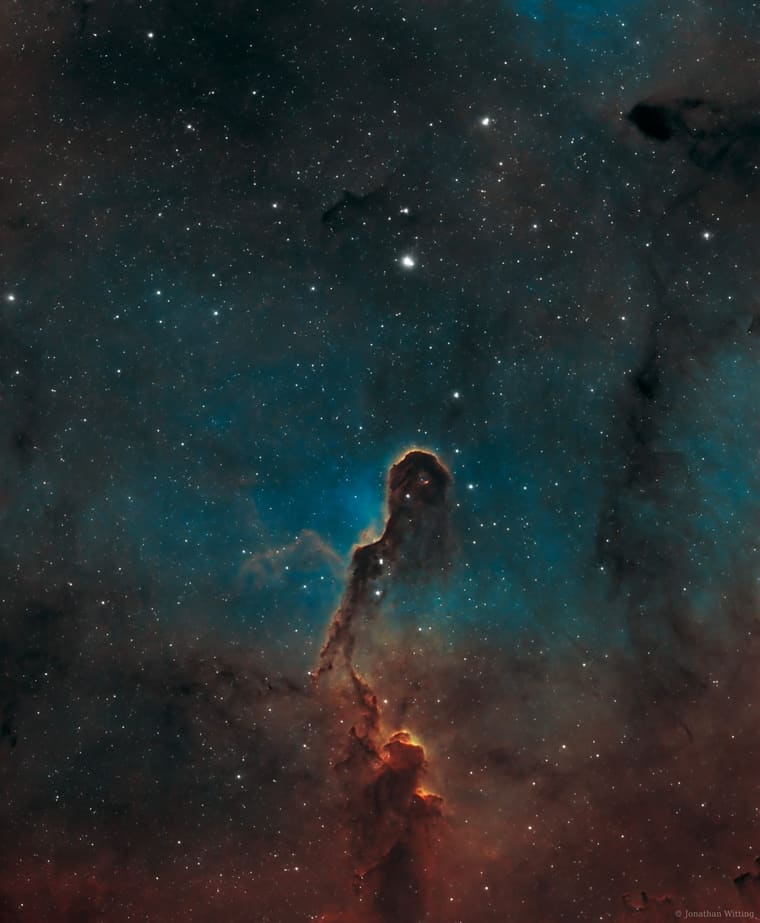 Elephant Trunk Nebula12h 18m · William Optics Zenithstar 81 APO · ZWO ASI 2600MM ProView in gallery →
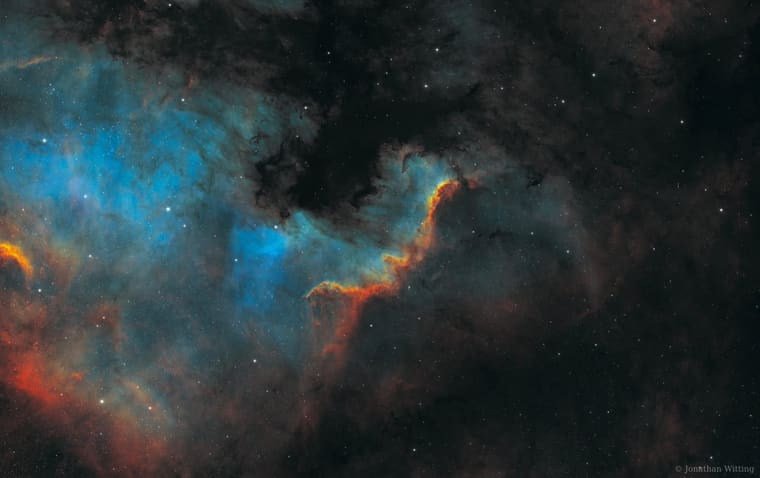 Cygnus Wall12h 48m · William Optics Zenithstar 81 APO · ZWO ASI 2600MM ProView in gallery →
Then there was the surprise of the year: the Northern Lights. Even though I live in southeast England, I caught a brief glimpse of them, something I never expected to see from here. I'd always assumed you needed to be in the Arctic Circle or somewhere very northerly. I captured the shot with my iPhone, just a short exposure of five to ten seconds, but it clearly reveals the greens and purples of the aurora. Not deep sky, not a galaxy, not even planetary, but it's astrophotography of some sort, and it was a highlight of the year.
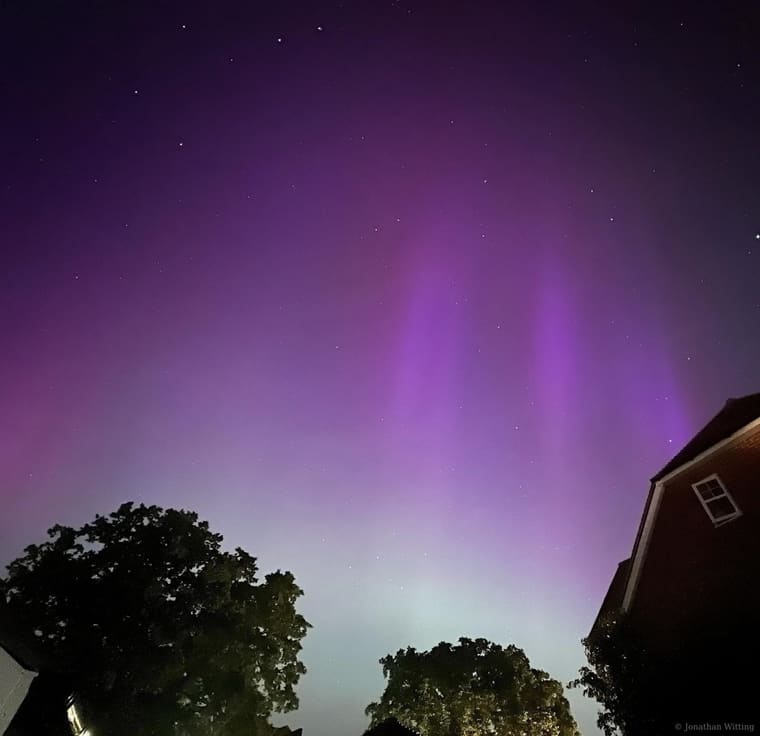 Northern LightsiPhoneView in gallery →
It hasn't all been plain sailing, mind. Since August a deeply frustrating run of cloudy skies has made it nearly impossible to capture anything new, which is at least partly why I've had the time to put this retrospective together. Still, looking back at where the year started and where it's ended, I'm pleased with how much I've improved, and the switch to mono has made a bigger difference than anything else I've changed since taking up the hobby. The full look back, images and all, is in the video above, and if you fancy following along in 2025 then a subscription on YouTube would be very welcome.
Here's to clearer skies and more to share in the new year. Happy New Year, and clear skies!