This session felt like a bit of a milestone for the channel: my first video covering an actual imaging session rather than image processing workflows. And what better target to start with than M42, the Orion Nebula, captured with my William Optics ZS81 telescope.
The Orion Nebula must be one of the most photographed nebulae circulating around the internet, and it sits in one of the most famous constellations too. Within Orion, the sword hangs down off the belt, and within that sword you'll find the nebula. It's bright enough that one night might well produce a decent image, but I was prepared to add a second night if needed, weather permitting.
The trickier part is that the Orion Nebula has a huge amount of dynamic range. Stick to a single exposure length and you either blow out the bright core or lose the faint outer regions, so rather than choosing one, I planned to collect a batch of subs at 60 seconds and another batch in the two to three minute bracket. Beyond that, the plan was simple: get the telescope out as early as possible, get everything set up and balanced, perform a polar alignment as soon as it was dark enough, then aim for somewhere between three and five hours of data.
Here's what I ended up capturing across the session:
- 53 x 180s
- 11 x 120s
- 182 x 60s
And the equipment I used:
- William Optics Zenithstar 81 + Sky-Watcher HEQ5 Pro
- ZWO ASI 294MC Pro + Optolong L-eXtreme filter
- William Optics 50mm Slide-base Uniguide Scope + ZWO ASI 120MM Mini
- ZWO ASIAir Pro
Two nights at the scope
The first night was clear throughout, so once the telescope was up and running on Orion I simply let it capture data all night, which is always a slightly nervy thing to do but generally works out. Checking the forecast, the following evening promised a few clear hours as well, so I planned to grab another couple of hours of data then too. In between, I checked the data in the morning and captured flat frames and dark flats to go with it.
The second morning was very, very cold, but the scope had powered through another night. It had been pretty cloudy, though I reckoned I'd still managed a few hours. With rain due later, I broke the telescope down, took it all apart and brought it inside, ready to go through the data and see what I'd actually got.
Into PixInsight
After the two nights I had a decent amount of data to play with. The first night was definitely the better and clearer of the two, but between them I'd gathered subs across a range of exposure lengths from three minutes down to one, with the bulk in the one minute category.
On the calibration side, I took fresh darks to go with the lights, since I hadn't done that for a while, plus the flats and dark flats matched up to each night's frames. Having a quick look at an individual three minute sub was encouraging: the nebula was immediately recognisable with a decent amount of detail already visible, which gave me a lot of hope for the stacked result.
Did that hope survive the processing? Judge for yourself, here's how M42 came out:
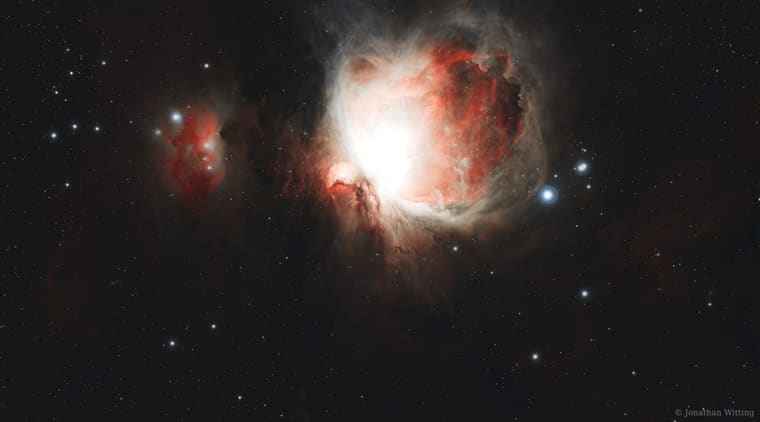 Orion Nebula6h 6m · William Optics Zenithstar 81 APO · ZWO ASI 294MC ProView in gallery →
You can watch the whole thing, processing and all, in the video above. If you enjoy this sort of thing, subscribing on YouTube helps me make more of them.